

What is PEMF
What is PEMF + TeraHertz?
A plain-language guide to the science, the research, and our commitments to honest, Canada-compliant communication.
PEMF — studied and popularised by NASA
Pulsed Electromagnetic Field therapy was not invented by NASA. The underlying science dates back decades earlier in physics and biomedical research. NASA contributed to popularising PEMF by studying it for astronaut tissue health in low-gravity environments — most notably referenced in a 2009 NASA-affiliated tissue-repair patent — which is often cited in PEMF literature today.
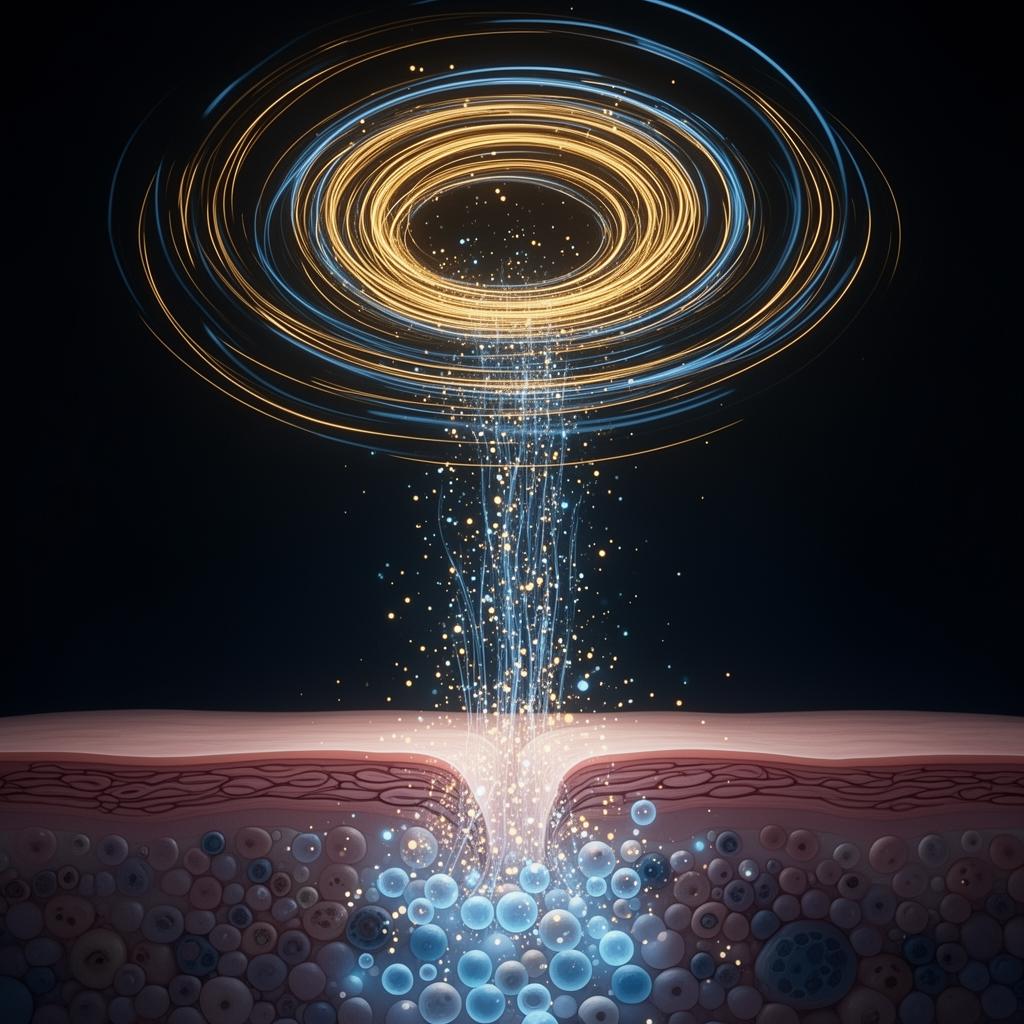
Reported PEMF benefits
- ·Supports comfortable, smooth body movement
- ·Supports healthy blood circulation
- ·Supports the body's natural detoxification
- ·Supports gentle cellular activity
How PEMF works — a "charger" for cells
Core mechanism
Low-frequency pulses help restore the membrane potential of fatigued cells.
Microenvironment
Helps reduce red blood cell clumping and supports oxygen exchange.
Repair & recovery
Supports deep tissue recovery, comfort, and a sense of physical restoration.
TeraHertz — the molecular "resonator"
TeraHertz waves sit between microwaves and infrared, with wavelengths of 3–3000 μm and a skin penetration depth of about 3–5 cm. They are studied for their gentle resonance with water molecules inside the body.
High-frequency resonance
Resonates with water molecules trillions of times per second.
Cellular activation
Generates deep warmth and supports the body's natural rhythms.
Metabolism & regulation
Helps ease muscle stiffness and supports local metabolism.
Think of your body like a smartphone: over time, the battery runs low. TeraHertz acts like a wireless charger, gently topping up your cells so they can return to their best state.
SYNERGY
"1 + 1 > 2" — surface meets depth
Full-coverage care
TeraHertz works on surface tissue and meridian areas; PEMF reaches deeper toward bone and internal areas — together they cover surface to depth.
Faster recovery rhythm
PEMF supports cellular permeability ("opens the door"); TeraHertz drives molecular movement ("clears the space"). The combination supports a more efficient recovery cycle.
RESEARCH AREAS
Areas where PEMF has been studied
Researchers have explored PEMF in many contexts. These are research areas, not treatment claims — outcomes vary by study, parameters, and population.
Educational summary of published research areas only. Not a medical claim and not a substitute for professional advice.
Selected published research
Brief, neutral summaries of randomised and controlled studies discussed in the OlyLife reference deck.
Pain & physical function
PEMF studied as an adjunct in rehabilitation and pain-management settings — not a replacement for prescribed treatment.
Inflammation & ulcer healing
Some studies report reductions in inflammatory markers and support for advanced tissue therapies.
Parkinson's motor function (RCT)
Randomised controlled trials have explored PEMF's effect on motor symptoms as part of broader management.
Blood pressure management
Double-blind, placebo-controlled studies have looked at PEMF as a potential adjunct for mild–moderate hypertension; mechanisms remain under study.
Menstrual pain (dysmenorrhea)
Trials have evaluated PEMF for symptomatic comfort related to menstrual pain.
Knee osteoarthritis (double-blind)
PEMF positioned as an adjunctive rehabilitation technique, not a standalone treatment.
Reported mechanisms of action
Anti-inflammatory effects
Studies report modulation of inflammatory pathways.
Microcirculation support
Dilation of small arteries supports tissue oxygenation.
Cellular energy
Helps restore membrane potential in fatigued cells.
Tissue repair signalling
Supports natural repair-signalling pathways.
These mechanisms interact to support the body's natural healing — providing a physiological framework, not a guarantee of any clinical outcome.
Clinical considerations & research limits
- ·Parameter variability — different studies use different PEMF settings; no single standardised protocol exists.
- ·Adjunctive role — PEMF is studied as a support tool, not a replacement for prescribed medication or treatment.
- ·Placebo response — some trials show meaningful placebo effects; interpret results with care.
SAFETY & COMPLIANCE
Safety profile & our compliance commitments
PEMF is a non-invasive technology — no surgery, no injections — and we communicate about it responsibly in the Canadian context.
Wellness, not medical claims
We never describe OlyLife products as diagnosing, treating, curing, or preventing any disease. We do not claim weight-loss, tumour detection, or named-condition outcomes. They are wellness devices designed for relaxation and comfort.
Health Canada aware
Canada regulates medical-device claims under the Food and Drugs Act. We follow Health Canada's advertising guidance and avoid any language that would require a Medical Device Licence we do not hold.
Transparent business disclosure
Before you join, we share a written income disclosure in English and 繁體中文 so you understand what most partners realistically earn.
Testimonials disclaimer
Any stories shared by our community are individual experiences. Results vary from person to person and are not a guarantee of any outcome.
KEY TAKEAWAYS
Seven things to remember about PEMF
Non-invasive — no surgery, no injections.
Supports comfort, relaxation, and circulation.
Research areas span pain, recovery, and circulation.
Best understood as an adjunctive tool, not a replacement for medical care.
Outcomes vary by individual and by device parameters.
Sessions are typically short and easy to integrate at home.
Use under appropriate medical guidance when relevant.
For deeper reading, we recommend consulting original peer-reviewed PEMF research for complete study design, statistics, and clinical context.